On Brand Purpose and Starting with ‘Why’
As business owners, we often focus on the 'what'. What is my business about? What is my offer? What is my niche?
What you offer tends to be a straightforward fact. "I offer editorial photography," or "I offer organic skincare."
An equally important question is 'why.' Your why is your purpose, and the deeper meaning or cause behind your brand. Without a why, your audience can understand what you offer, but they might not feel why it matters.
One example is Kye Intimates, whose About page expresses their purpose as: "Balancing softness with functionality, and romance with modernity […] guided by the belief that what we wear should deepen our connection—to ourselves, to one another, and to the world we move through." Kye sells underwear, but they treat it as something that can bring deeper connection to ourselves and to others, which is a much more interesting brand message than simply stating what they offer.
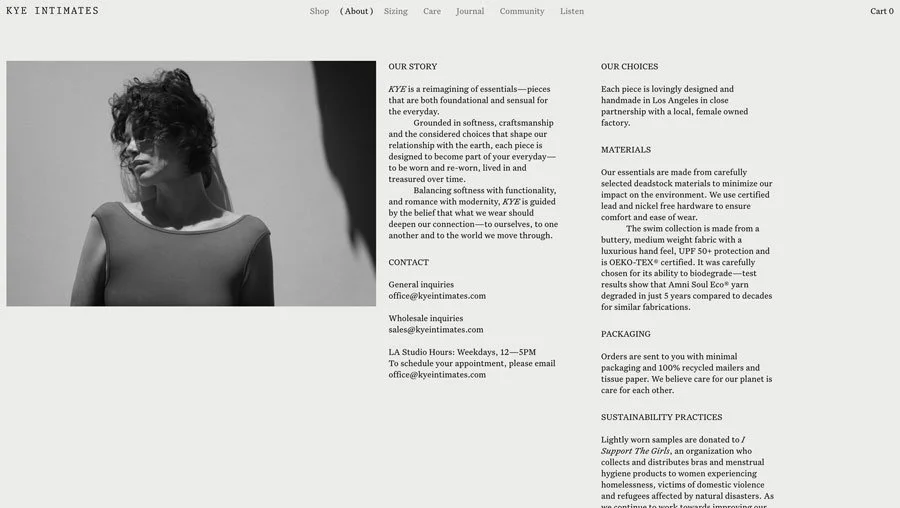
Kye Intimates, About page.
Beyond their copy and messaging, Kye have a focus on creating items that are durable and long lasting, made for those who want to enjoy the pieces they buy for a long time and not contribute to waste and fast fashion. They take that connection to "the world we move through" seriously, and make it visible in their processes. Their pieces are handmade in a local, female-owned factory, created from dead stock materials that might otherwise have gone to waste, and are shipped in recycled packaging. Lightly worn samples are donated to I Support the Girls, an organization that distributes essential items to homeless women. The point here is that Kye aren't only telling us their purpose and values, they are actively demonstrating them.
Not every brand's purpose needs to stem from ethics or sustainability, however. It also doesn't need to be something grand or world-changing. It can come from something small and personal, something that you've noticed or experienced. Good Girl Snacks say: "The trends online following 'hot girl walks,' 'girl dinners,' etc. are used as an adjective to describe tapping into female energy […] We wanted to do the same with our snacks […] we want them to make you happy. We invite everyone and anyone to tap into the hot girl energy we know you all harness." They wanted to lean into a playful, feminine feeling that makes people feel good, and made it visible through their brand, from the conversational style of copy to bold colors, fun illustrations, and interactive scroll-based animations.
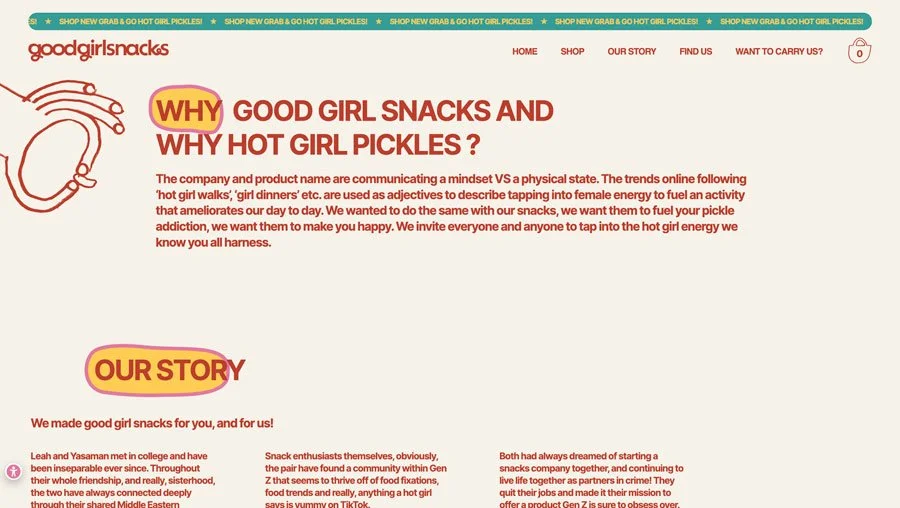
Good Girl Snacks, About page.
There are three things we believe when working on brand purpose:
1. Purpose should be anchored in what the brand believes
That means, a brand shouldn't claim that the environment or sustainability is a core part of their brand if it isn't. Disconnect between a brand's claimed purpose or values and its actual practices can be sniffed out, and audiences are sensitive to green washing and false claims.
2. Purpose should be visible in the brand
Audiences need to see that a brand's purpose is something it believes and stands by. It should be considered in the brand's offers, voice, and marketing — in short, it should be something the audience can see and connect with.
3. Purpose should play a part in the brand's emotional world
Les Binet and Peter Field's study of the IPA Effectiveness Databank found that emotional campaigns are more likely to drive business growth, and that brand-building means creating associations and mental bonds. Purpose is one of the aspects of brand world-building that can support emotional connection with audiences.
For example, Patagonia’s Don’t Buy This Jacket campaign was an incredibly memorable piece of marketing in which the brand flipped its purpose into something provocative, asking consumers whether they needed to buy the jacket, calling attention to sustainability and fast fashion. Patagonia’s approach shows that purpose isn’t just about creating belonging. It can also help you take up a position in the market, showing what you are for and what you are against.
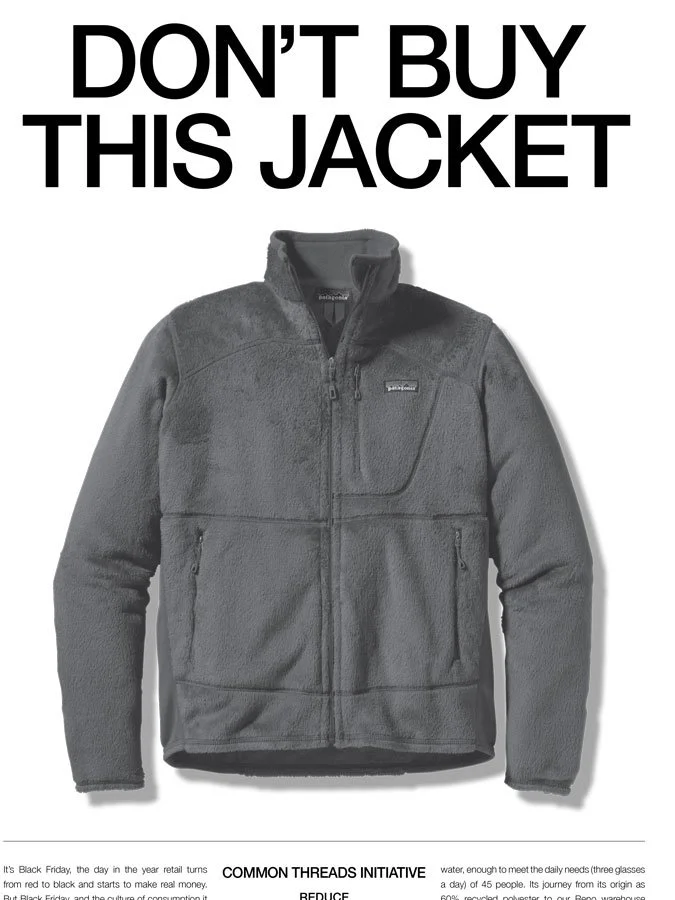
Patagonia’s Don’t Buy This Jacket advertisement, published in The New York Times on November 25, 2011. Image via Patagonia.
Hi, I’m Hannah Shaw. I’m a brand designer and strategist at Studio Founded, a full-service creative studio creating brand worlds that invite dialogue and desire. If you’d like to discuss building your brand together, you can reach out to me here.