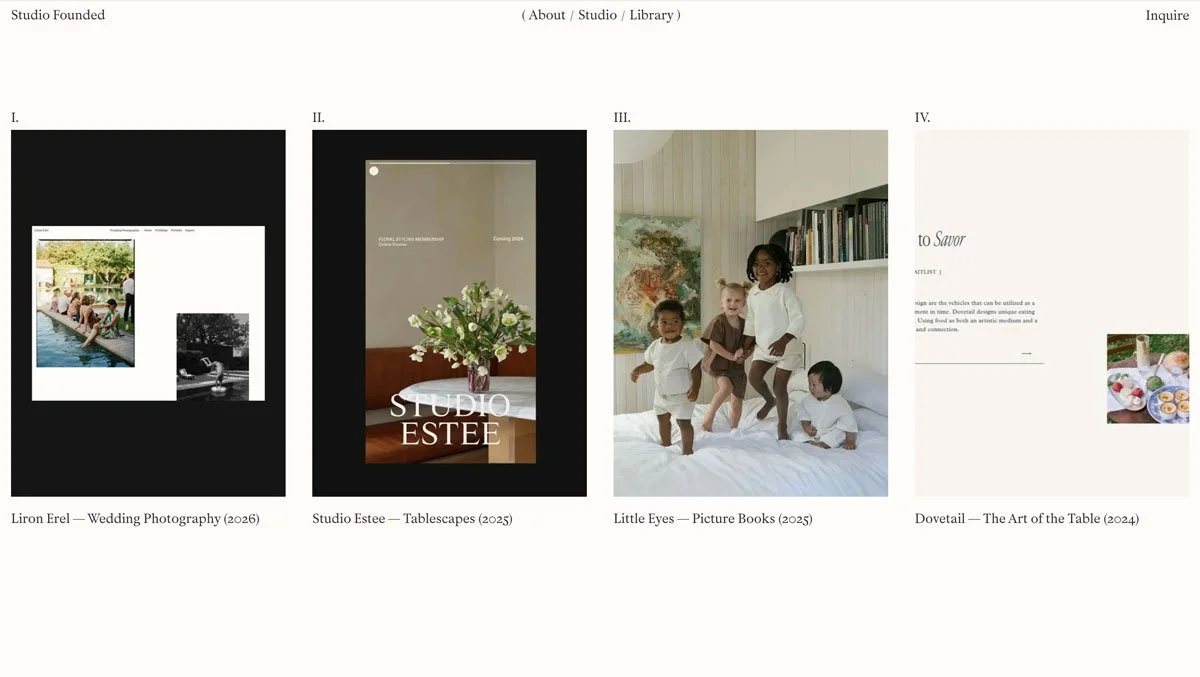
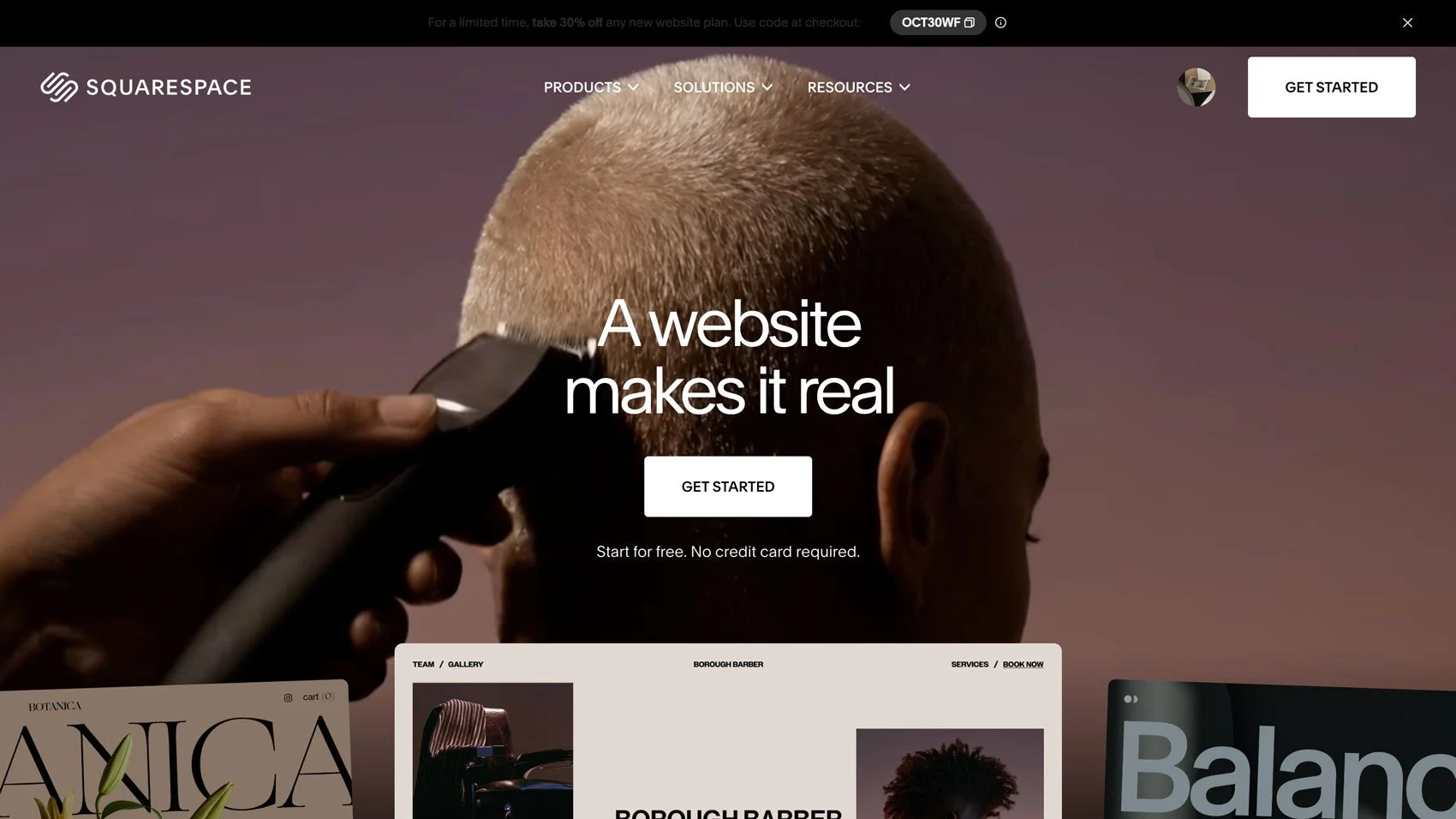
We use Squarespace* for the majority of our bespoke websites, and it’s no surprise that we love it. But we’ve also built sites and templates for hundreds of small business owners, and seen how they’ve grown with the platform.
While we don’t recommend Squarespace to every business owner, it is a great choice for anyone who wants running a website to be easy, without it taking up a chunk of time that they’d rather spend elsewhere. It also comes with a range of features from design tools to e-commerce, blogging, newsletters, and scheduling.
Below are 10 of our favorite benefits of Squarespace for business owners.
Affiliate disclosure: Some of the links in this article are affiliate links, marked with an asterisk (*). Studio Founded may receive a commission from qualifying purchases made through these links, at no additional cost to you. You can read our full affiliate disclosure here.
1. Automatic Updates
In our opinion, this is one of the #1 Squarespace benefits. Platforms like WordPress are amazing and have a huge degree of flexibility, but they require manual maintenance and upkeep to keep your site secure and prevent hacking, which is even more important now that GDPR and data security is so important. Squarespace handles updates and security for you, so it’s never something you need to spend time on or worry about.
2. Drag-and-Drop Design
The second reason on our list is the drag-and-drop design tools.
With Squarespace 7.1 Fluid Engine, you can visually move this around and order them on the page, with separate views for desktop and mobile. It also comes with a lot of design features, including:
Image masks
Sliders
Accordions
Scrolling marquees
Animations
Predesigned sections and pages
The option to add extra design features using custom code and plugins
As designers, of course we care about the visuals, but we also care about ease of use, and we love that Squarespace makes these features simple for non-designers, so our clients can always make updates themselves once we hand their site over to them.
And if you don’t want to design yourself, there’s always third-party templates created by designers and developers that can give you a more custom look. You check out our post on when you should choose a premium template over a free one, and our curated list of the 11 best places to buy premium Squarespace templates.
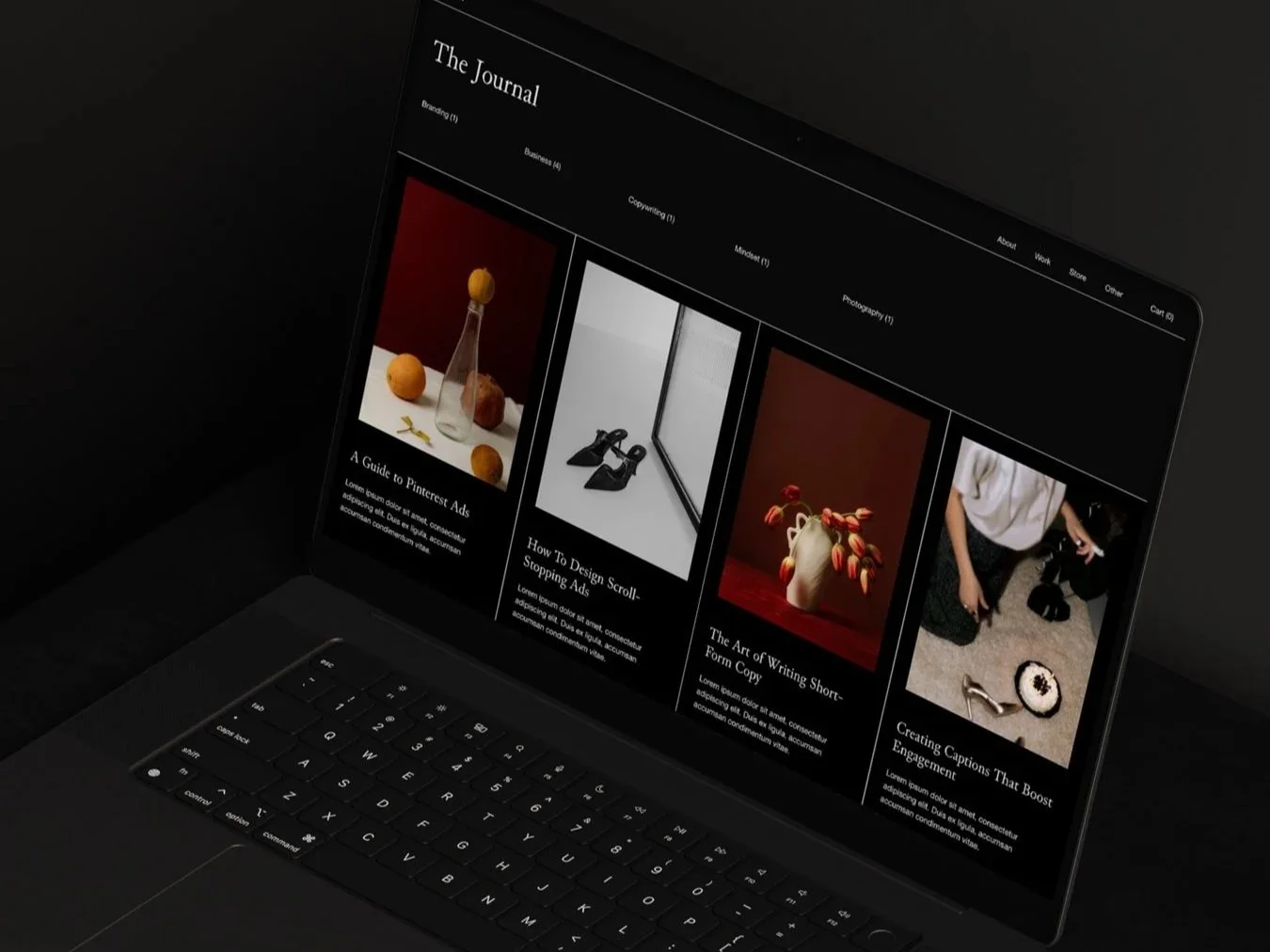
The Liren Squarespace Template by Studio Founded.
3. Squarespace E-Commerce
In our experience, starting to sell online can feel really daunting. There’s a lot of moving parts to navigate, from setting up the products, to taxes, discounts, and shipping. As an all-in-one platform, Squarespace E-commerce* is rolled into all Squarespace websites and plans (though different plans have different features and transaction fees). While you don’t have to have a store page on your Squarespace site, it’s easy to enable it if it’s ever something you want to explore.
From your store, you can offer physical products (shipped), digital products (instant downloads), services, courses, and memberships, without needing to juggle platforms or plugins. You can use it to:
Accept payments through Stripe, PayPal, or Squarespace’s own payments system.*
Send order notifications and abandoned cart emails.
Set up discounts and special offers.
Offer subscription products.
Collect reviews.

4. Squarespace Blogging
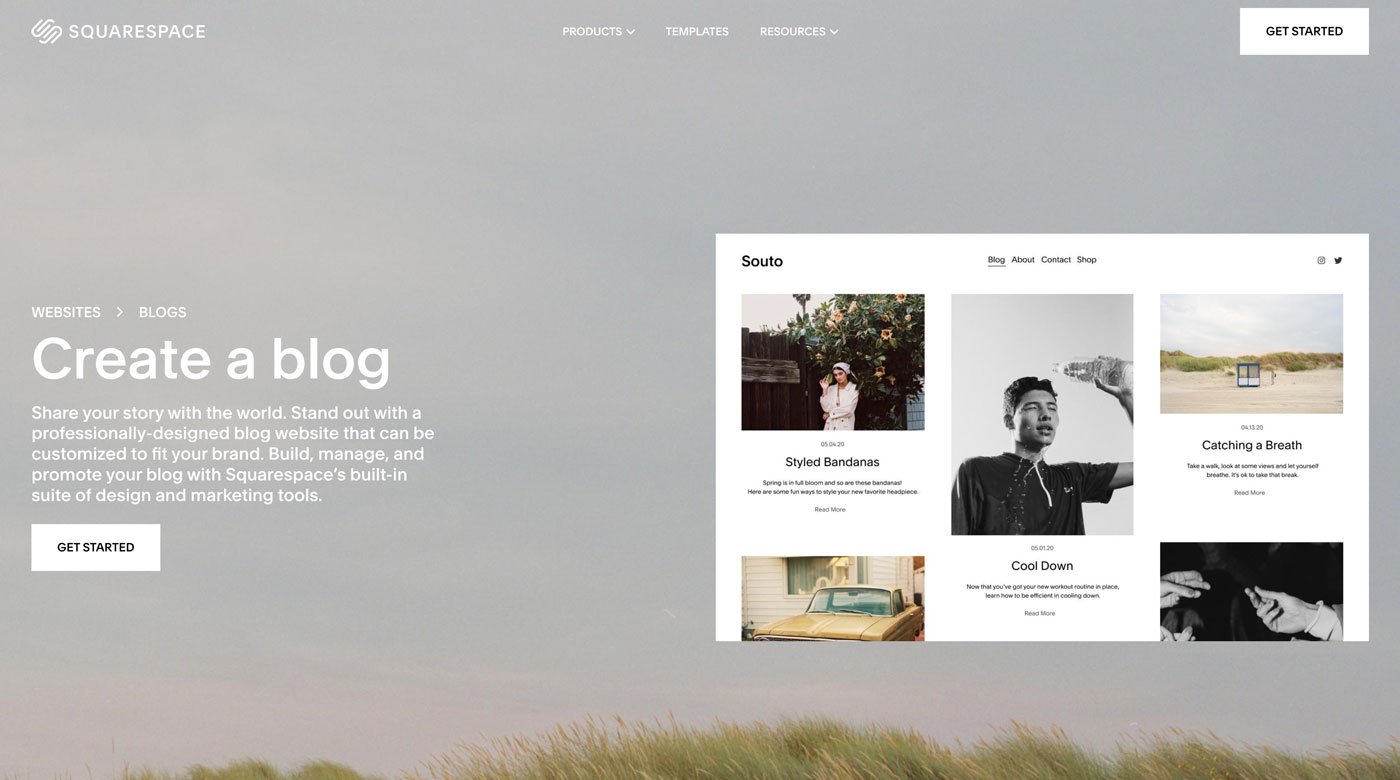
We recommend a blog to almost any business, because almost everyone has useful and interesting content to share that can grow their business through organic traffic. Blogging helps you rank for keywords related to your offers or niche, and increases your organic search visibility, when paired with good SEO practices.
Squarespace Blogging* means your blog can run inside your website, without needing to add on a separate WordPress blog or another tool. You can add text, images, videos, and optimize each post for SEO. There’s also several styling options, plus third-party plugins for extra features. You can visit our post on the best Squarespace blog plugins to see what’s possible.
5. Acuity Scheduling
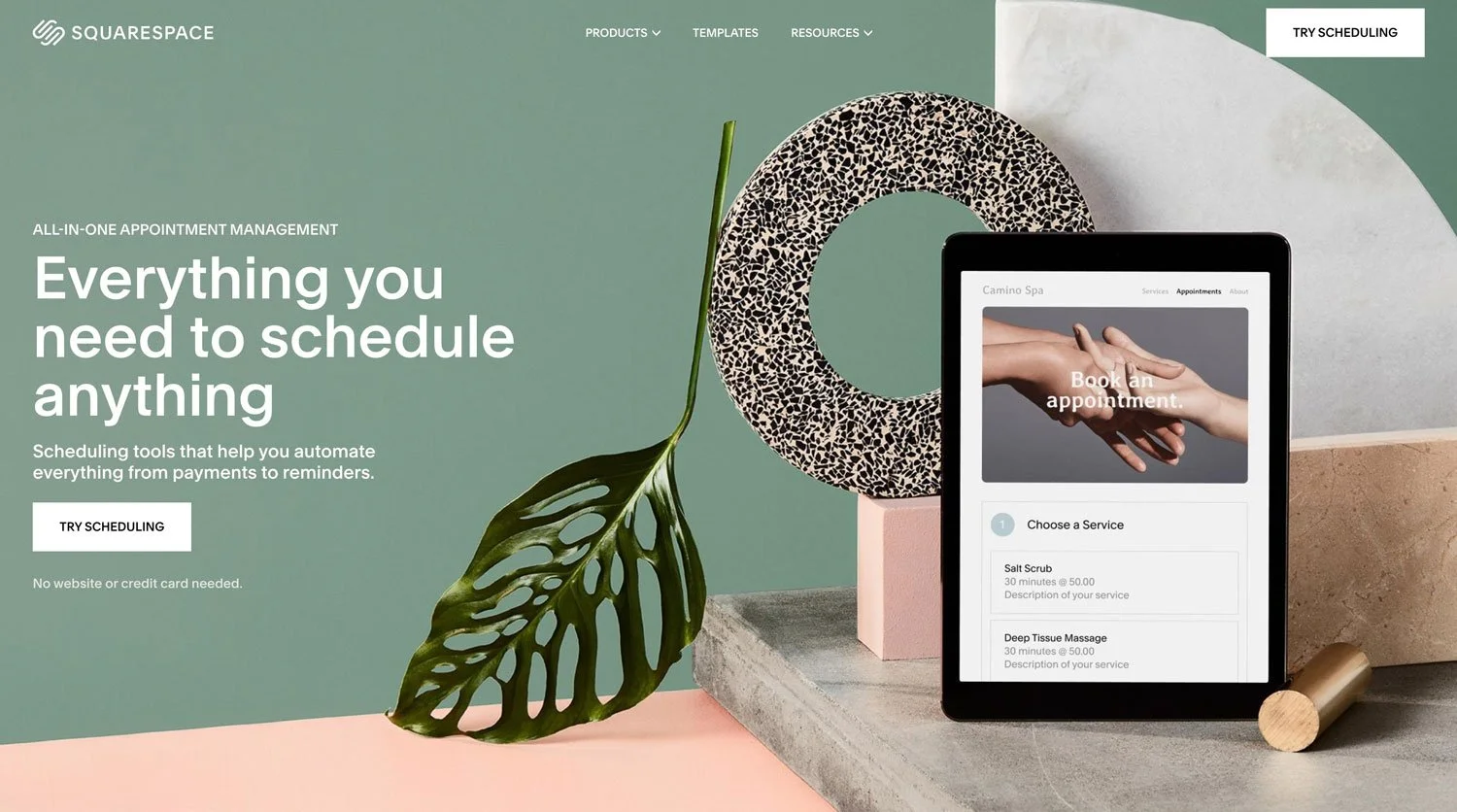
Acuity Scheduling* is scheduling software that’s built into your Squarespace dashboard. It’s another feature that keeps all the moving parts of your business in one place, so you can schedule client calls, have clients book and pay for 1:1 sessions, groups classes, and workshops, and set your availability and appointment lengths.
Please note that Scheduling is an add-on that’s not included in your Squarespace subscription.
6. Squarespace Email Campaigns
Squarespace Email Campaigns* is Squarespace’s own newsletter system, that’s again part of your Squarespace dashboard. It includes email templates that you can customize to fit your brand, and you can use it to send promotional emails, launches, and updates, either as and when you want to send them, or on an automated basis to onboard new subscribers. You can also view open rates and conversions and segment audiences. Unlimited contacts are included with every plan.
Please note that Email Campaigns are an add-on and aren’t included in your Squarespace subscription.

7. Squarespace Member Areas
With most platforms, you would need to add on membership software like Circle to offer memberships. While Circle is a more comprehensive platform, Squarespace Member Areas are simple and straightforward, which can be helpful if you don’t need tons of extra features. It’s also hosted directly on your website, so your members don’t need to go to a third-party platform to access your content.
You can use it to offer members-only content like videos, courses, and downloadable resources. It’s really flexible and it can be used in many different ways, with several payment options that you can offer, from one-time payments to subscriptions. One of the benefits of Squarespace is that it’s an all-in-one platform, so you can easily combine Member Areas with things like blogging to bring traffic to your membership, your store to sell additional offers, and newsletters to keep members engaged and informed.

8. Squarespace Invoicing
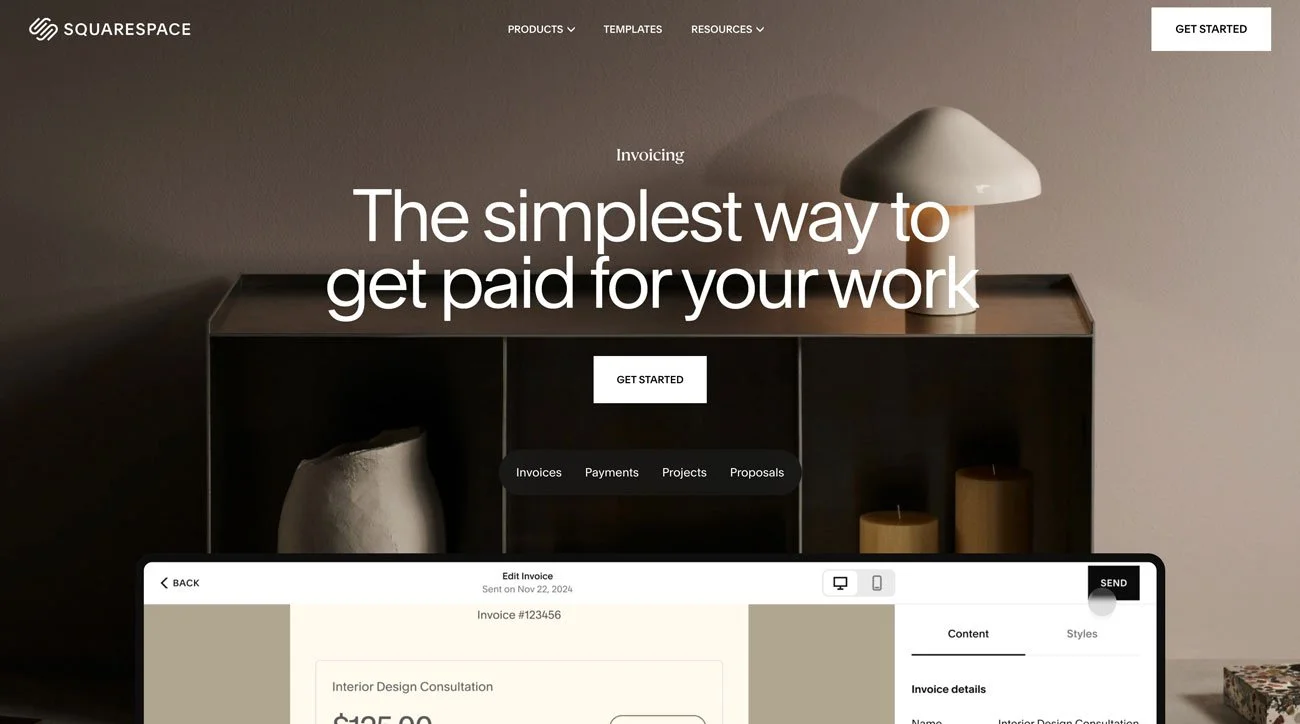
Squarespace Invoicing* is great if you’re a freelancer or agency who needs to send invoices for client work. Invoicing allows you to create and send branded invoices from your website, and have clients pay it online.
What we really like is that it isn’t just for invoices, it’s more of a simple client relationship management (CRM) system. It connects to your Squarespace contacts forms so you can track and manage new leads. You can also manage project milestones and workflows, and create contracts, proposals, and estimates, which helps simplify another part of running your business. Our guide to Squarespace Invoicing walks you through the process of setting everything up so you can use your Squarespace site as your CRM.
9. Squarespace SEO
For us, organic search is one of the biggest ways we bring in traffic, so SEO is important on our list of platform must-haves. A lot of people prefer WordPress for SEO, but it matters less which platform you use and more how you optimize your site. This means using the right keywords, adding alt text, and writing page meta data. As a guide, you can check out our Squarespace SEO Checklist to learn how you can optimize your site.
Squarespace auto-generates a sitemap for you to submit to Google Search Console, and allows you to set your heading structure, and image alt text, and write page meta data. It includes analytics and a Google Search Console integration so you can see how your site is performing in search results from your Squarespace dashboard.

10. 24/7 Support
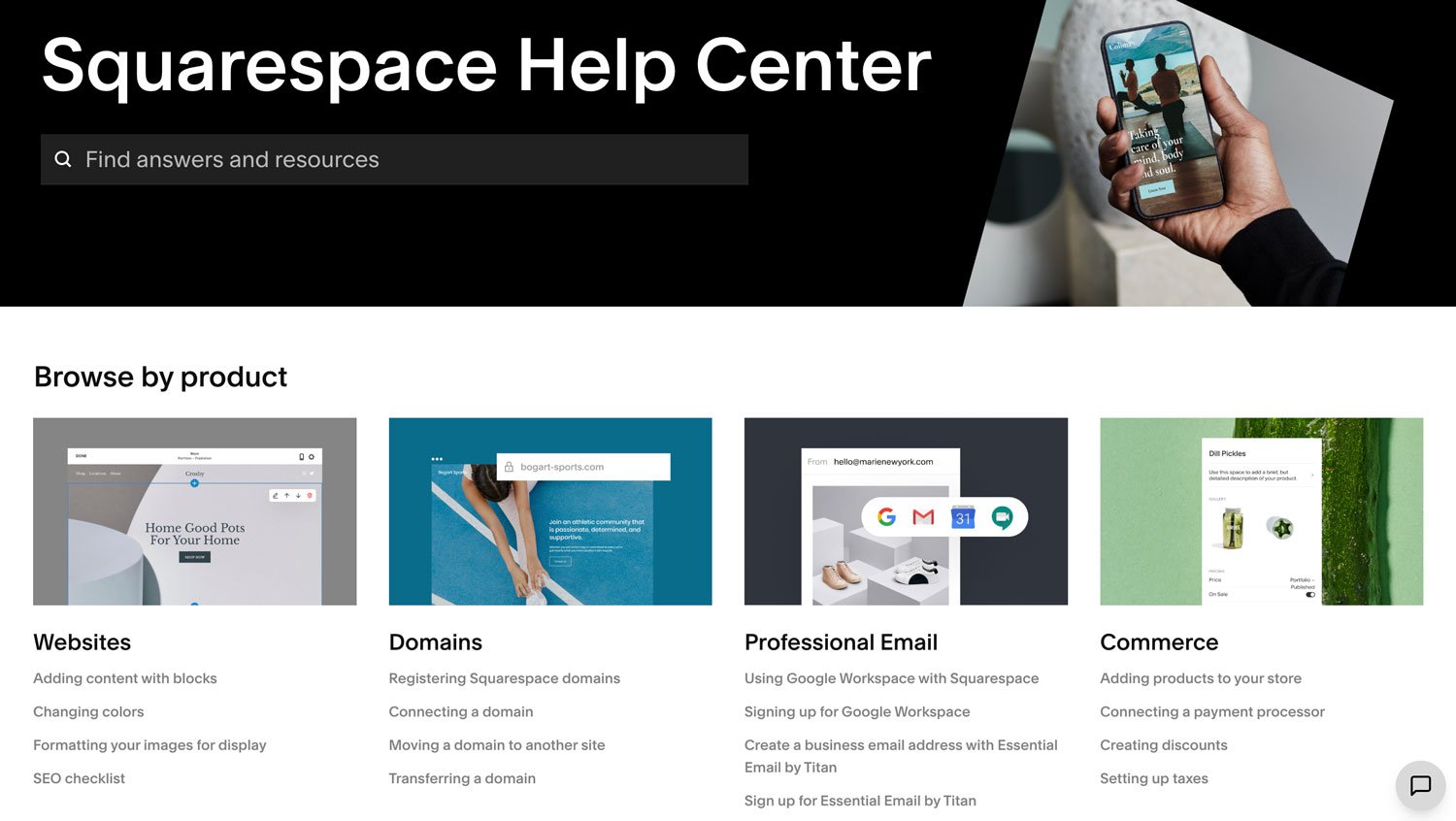
One of the benefits of Squarespace that we absolutely love is that they offer 24/7 email support, and live chat support on weekdays. This is so important to us because we want our clients and template customers to be supported long after our work together ends, and to be able to get help from their website platform whenever the need. Squarespace also offers a Help Center with a library of guides and tutorials that you always refer to if you get stuck,
The Benefits of Squarespace, and the Limitations
While we’ve explored many of the benefits of Squarespace in this post, we mentioned at the start of this post that we don’t recommend Squarespace for every business owner. The reason is that while Squarespace is incredible for ease of use as an all-in-one platform, its features aren’t as robust as specialist platforms. For example, for businesses with more complex e-commerce needs, we would build their website on Shopify*.
There are also cases where a website might want to use Squarespace as the base platform, but add more features with third-party services. For example, we might build an e-commerce website by hosting the majority of its pages and blog on Squarespace, but combine it with the Shopify Buy Button so they can use Shopify Checkouts. Our personal set up is to use Squarespace for our website and blog, combined with FloDesk* for newsletters and ThriveCart* for checkouts.
The good thing is that you can always start with Squarespace if you’d like a simple way to begin, then add-on third-party integrations as you grow. Using Squarespace doesn’t mean you can’t use other platforms, and multiple tools can work really well side-by-side if needed.
Shop Art-Directed Squarespace Templates
If you enjoyed this guide on the benefits of Squarespace and would like to try Squarespace yourself, you can start a 7-day trial for free*, and use our code STUDIO10 to save 10% on your subscription.
And if you want to get started but aren’t confident with design, explore our collection of art-directed Squarespace templates. Each comes with a complete collection of 15+ pages, an extended 12-month Squarespace trial, and a 25% discount on your first year of Squarespace with an annual plan.